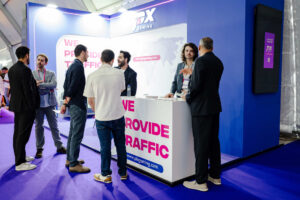
SBC Lisbon 2026 closed on 1 October after three days at Feira Internacional de Lisboa (FIL) and the MEO Arena. PiXGaming exhibited at stand F326, in the affiliate summit aree of the show floor, meeting operators, affiliate networks and media partners from all around the globe. PiXGaming has a constant presence, being also an exhibitor in the 2025 edition.
This was SBC’s third consecutive year in the Portuguese capital, with plans to stay until 2030. Ahead of the event, the organiser said it expected around 40,000 delegates, more than 11,000 operators and about 800 exhibitors and sponsors. It was also the first edition to run the Affiliate Leaders Summit as a standalone, co-located event with its own conference, expo and awards. That brought a noticeably larger affiliate and performance-marketing contingent to Lisbon.
Beyond the stand, the summit offered a useful reading of where the industry’s pressure points now sit. Three themes dominated.
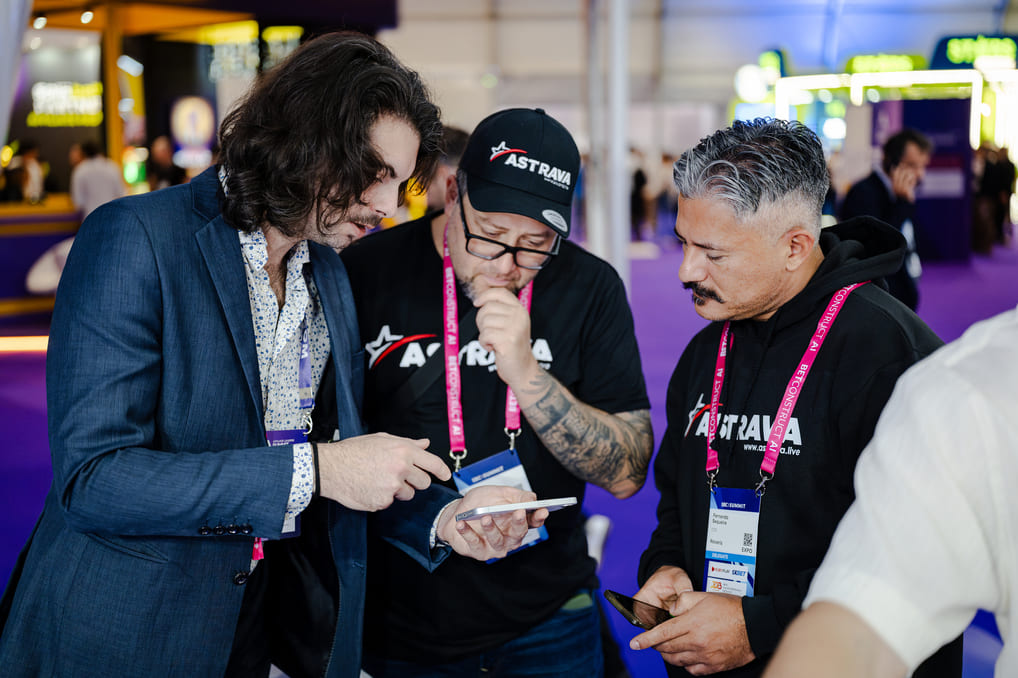
Brazil: a regulated market switched off by provisional measure
No topic shaped the week more than Brazil. On 25 September, four days before the doors opened, President Luiz Inácio Lula da Silva signed Provisional Measure (MP) 1,394/2026. It bans fixed-odds betting, covering both sports betting and online casino, less than two years after the regulated market launched on 1 January 2025.
The timetable has been severe. Deposits stopped on publication, and players had until 5 October to withdraw balances. Licensed sites and apps went offline on 6 October, and any money left in accounts is being returned through banks between 9 and 14 October. All authorisations expire on 25 October. That is also the date of the presidential runoff between Lula and Senator Flávio Bolsonaro, who led the first round on 4 October with 47.0% of valid votes against Lula’s 45.2%.
The ban is far from settled, and it is being fought on two fronts.
In Congress, the MP lapses after 120 days unless it is approved. If it lapses, Law 14,790/2023, the framework that created the regulated market, returns into force. Because of the parliamentary recess, the vote may fall to the Congress elected this month. That Congress takes office in February 2027, and Bolsonaro’s Liberal Party will hold the largest caucus in the Chamber of Deputies.
In the courts, trade bodies ANJL and Anseja and a national mayors’ association have filed constitutional challenges at the Supreme Federal Court. Leading football clubs, including Flamengo, Fluminense and Cruzeiro, have backed the challenges. Justice Luiz Fux, the rapporteur, asked the Attorney General’s Office to respond within 72 hours on 2 October, but no injunction had been issued by the time sites went dark. The 85 licensed operators each paid R$30m for their authorisation, and lawyers expect compensation claims whatever the outcome.
In Lisbon, ANJL’s legal counsel described the ban as unlawful. The Sport Integrity Global Alliance, which represents sports bodies rather than operators, publicly opposed dismantling the regulated market without a credible transition.
Domestic politics point in both directions. A Datafolha poll published on 1 October found 78% of Brazilians in favour of ending online betting and casinos, and Quaest put support at 62%. Yet members of Lula’s own campaign have told the Brazilian press they believe the ban cost him votes in the first round.
Why it matters for acquisition.
Brazil had become one of the world’s most important betting markets. It had nearly 200 authorised websites, and federal tax receipts reached around R$8.7bn between January and July 2026, according to Brazil’s Federal Revenue Service. Operators that pre-committed media budgets, sponsorships or fixed-fee affiliate deals now face stranded spend, and since 6 October that exposure is no longer theoretical. Under a revenue-share model, acquisition cost falls to zero the moment activity stops, and there is no prepaid inventory to write off.
The black market moves in. The ban did not remove demand; it moved it. Monitoring platform Bet Legal identified 428 new illegal betting sites between the announcement and 27 September, around 143 a day. That compares with about 62 a day while the ban was only being threatened. SBC Noticias Brasil counted 575 illegal operators on 26 September, up from 331 the day before. H2 Gambling Capital estimates that around R$25bn of annual spend will migrate to unlicensed operators, taking the illegal market from about R$17bn to roughly R$42bn a year. Enforcement capacity is thin: Brazil’s Prizes and Betting Secretariat (SPA) has four staff dedicated to oversight.
Players lose, unlicensed operators gain. For bettors, the shift means losing the protections the 2025 framework introduced: identity and age verification, deposit limits, self-exclusion, guaranteed withdrawals and a regulator to complain to. Local banks and payment firms are barred from processing betting transactions, so many players will turn to crypto and foreign payment methods that offer even less recourse.
For unlicensed site owners, the ban is a windfall. They inherit millions of displaced customers overnight. They pay no R$30m authorisation fee, no Brazilian tax and no compliance costs. And they no longer compete with the 85 licensed companies that went dark on 6 October. The operators that invested most in playing by the rules are the ones that have been removed from the market.
Black markets and the role of Big Tech
Brazil’s ban does not rely on the SPA alone. Since 6 October, internet providers, app stores and Brazil’s Internet Steering Committee (CGI.br) have been required to block betting sites and apps, and online platforms must remove betting advertising. With hundreds of illegal domains appearing in the days after the announcement, enforcement now depends largely on Google, Apple, Meta and the country’s ISPs. The open question is whether blocking can keep pace with sites that resurface on new domains daily.
In the Netherlands, trade body VNLOK is suing Meta over gambling ads it says reach consumers from unlicensed operators. In Finland, which opens its regulated market in July 2027, operator PAF is piloting a different approach: it shares licence documents and URLs with Meta so the platform can tell regulated advertisers from illegal ones.
Brazil has taken a third route. A blanket ban removes the distinction between licensed and unlicensed advertisers entirely, so platforms have nothing left to verify, only things to block. That is the weakness critics in Lisbon kept returning to. When the legal option disappears, the illegal one stops being clearly separated from it.
For affiliates, the implication is practical. Ad platforms and regulators will lean harder on verifiable signals of legitimacy. Compliance teams evaluating partners increasingly ask for registrations, consent-framework membership and certified ad-serving technology before any campaign goes live.
PiXGaming, for example, holds several licenses to advertise:
- IAB Europe and IAB Canada Transparency and Consent Framework registration
- Google Ads third-party vendor certification
- A registered-vendor licence in Romania
- Registration as a media vendor with Greece’s Hellenic Gaming Commission
Prediction markets edge towards Europe
The new Global Prediction Markets Forum drew speakers from Kalshi, Betr and WagerWire. Charles Mizzi, CEO of the Malta Gaming Authority, confirmed that prediction-market operators are applying and that interest has been substantial. Matchbook’s Chief Growth Officer, Alex Gowar, cautioned that European customers, long used to regulated sportsbooks, will need to be educated into a new way of betting.
That education gap is an acquisition problem. New verticals rarely convert on first contact, which raises the value of reaching visitors who showed interest but did not register.
What we heard at the SBC Lisbon 2026
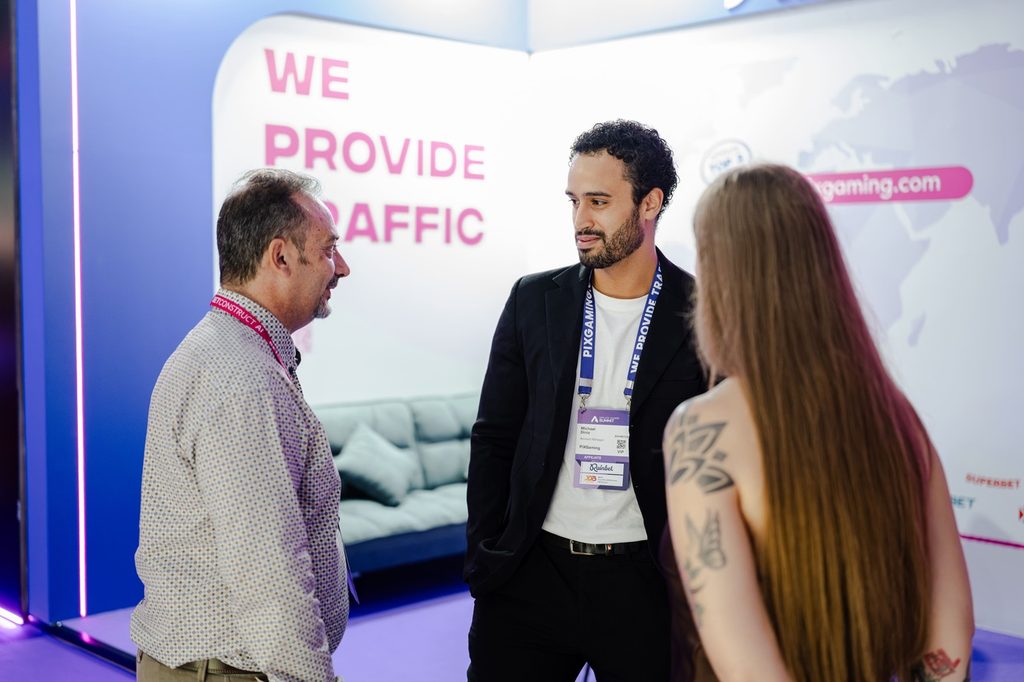
The conversations at stand F326 reflected the themes on stage. Operators wanted to know three things:
- how to recover the large share of visitors who leave without registering or depositing
- how to grow while acquisition costs rise in Tier-1 markets
- how to protect acquisition budgets as regulation tightens
Many were also exploring how to diversify exposure away from any single jurisdiction.
“Lisbon showed how quickly the ground can move. Within days, Brazil went from one of the most promising regulated markets to one with no licensed operator online. Operators we met want growth without locking money into media plans that regulation can strand overnight. That is exactly where a revenue-share-only model earns its place.” Fernando Russo, Head of Sales at PiXGaming.
Key takeaways
- Brazil’s licensed betting market went offline on 6 October under MP 1,394/2026. Licences expire on 25 October, the day of the presidential runoff.
- The ban is not final. It faces three constitutional challenges at the Supreme Federal Court, and it lapses after 120 days without congressional approval, a decision that may fall to the newly elected Congress.
- Illegal sites surged after the ban. Bet Legal recorded a shy figure of about 143 new illegal domains a day.
- Regulators and trade bodies are pushing Meta and other platforms to separate licensed advertisers from illegal ones, raising the bar for affiliate compliance.
- Prediction markets are applying for licences in Malta, but will need patient customer education in Europe.
- In volatile markets, revenue-share acquisition removes the risk of stranded media spend.
FAQ
Has Brazil banned online betting? Provisional Measure 1,394/2026, signed on 25 September 2026, bans fixed-odds betting. Licensed platforms must go offline from 6 October and licences expire on 25 October. The measure lapses after 120 days unless Congress approves it.
Has illegal gambling grown in Brazil since the ban? Yes. Monitoring platform Bet Legal identified 428 new illegal betting sites in the first days after the announcement, with more the number now at 5 digits. H2 Gambling Capital estimates the unlicensed market will reach about R$42bn a year. Players on these sites lose regulatory protections such as age checks, deposit limits and guaranteed withdrawals.
What is a revenue-share affiliate model? The affiliate earns a percentage of the net revenue generated by the players it refers, instead of a fixed fee or upfront CPA. The operator pays only when referred players produce revenue.
How does retargeting help iGaming operators? Most site visitors leave without registering or depositing. Retargeting shows those visitors relevant ads on other websites, bringing them back to complete the conversion.